
CASE STUDY · KINIA’S ROBOTICS PROGRAMME
When Football
met Robotics
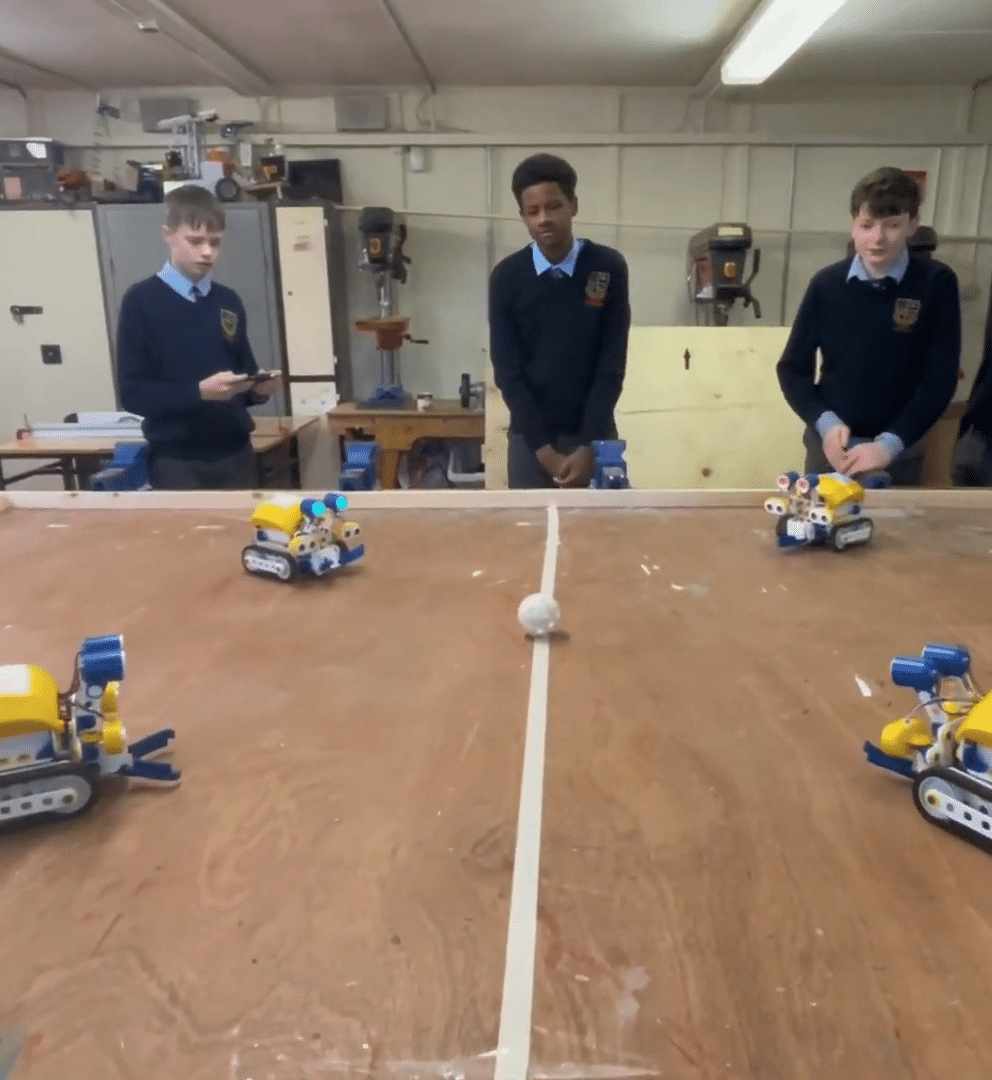
Ten post-primary students at St Mary’s Academy turned their love of football into a fully functioning robot soccer game. Working together, they designed, built and coded every aspect of the project, learning robotics in a fun, hands-on way.

13
Students
involved
5
Robots built
and coded
3
Teams
1
Robot football
game
What is the Robotics Programme?
Educators first complete Kinia training with an introduction to coding, simple circuits and engineering, and then by using Scratch, Makey-Makey and the Skribot, they lead a project of their students’ own design, through hands-on learning.
At St Mary’s Academy, Pat Brennan took that Kinia training and handed the reins over to his students.
The result was Somo Robo Soccer: a robot football game the group built from the ground up, combining a real passion for football with brand-new coding and engineering skills.

ORGANISATION
St Mary’s
Academy CBS
 ORGANISATION TYPE
Post-primary school

EDUCATOR
Pat Brennan

PROJOECT
Somo Robo Soccer
Starting from scratch
For most of the students, this was their first experience of robotics and coding. One student, Nikita, had used Scratch before, but building and programming a Skribot was new to everyone. The project was deliberately designed so that everyone could take part, whatever their starting point, and even the students studying woodwork found their skills suddenly in demand when it was time to build the pitch.
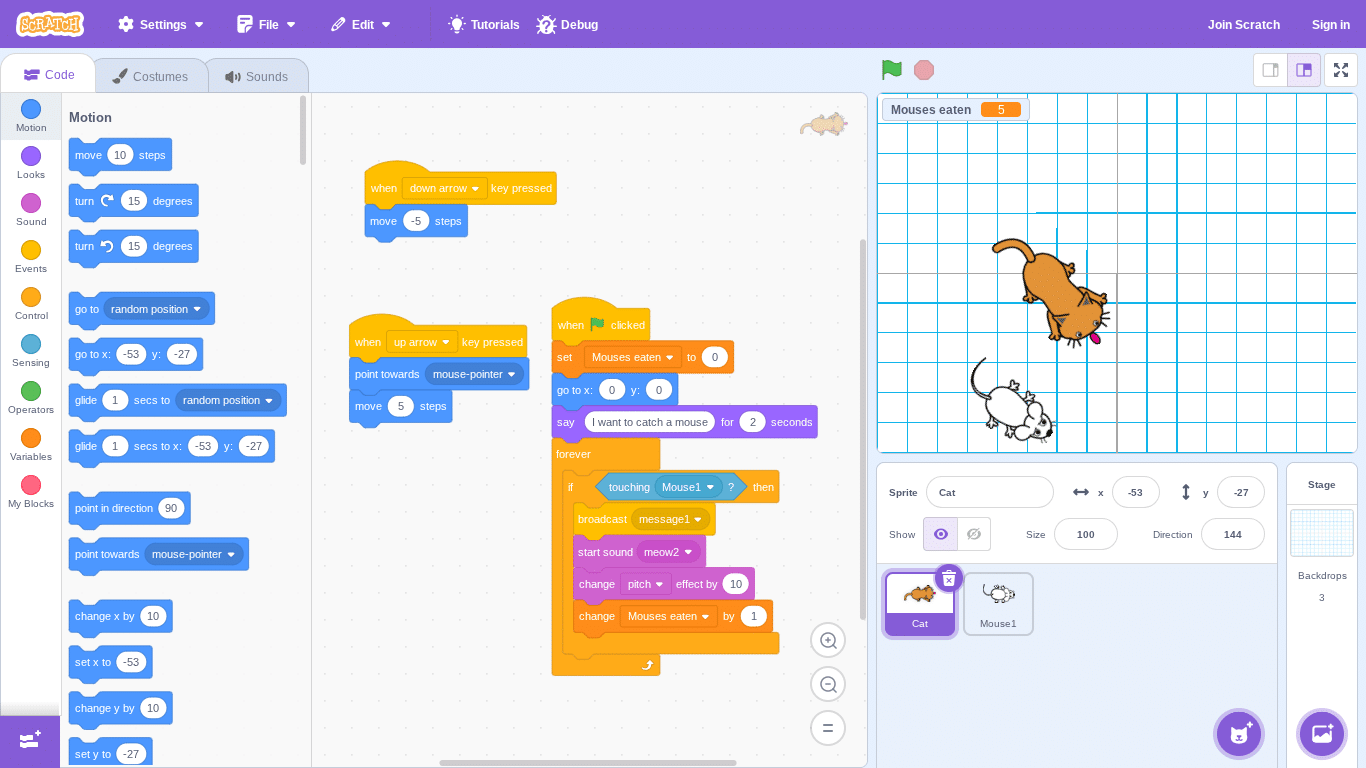
The team getting to grips with scratch during the project
How the project came together
01
Create
Designing and building the pitch, wooden goals and the physical set-up with a hand from the Woodwork students.
02
Code
Programming the Skribots in Scratch, including coloured LEDs so each robot’s team could be told apart.
03
Capture
Assembling the robots, then filming and editing a full video that captured the methodology behind the project, as the teams competed.
I realised that working together and combining everyone’s ideas helped us design a better robot.
A STUDENT
St Mary’s Academy CBS
A project built on teamwork
Students were encouraged to experiment, test ideas and solve problems together, rather than follow instructions, with Pat guiding them from the sidelines, and giving them the confidence to try things and learn from their mistakes.
It created a classroom where young people felt comfortable asking questions, sharing ideas and helping each other whenever a challenge came up.
Students who worked on group projects before said none had ever needed this much communication, teamwork and problem-solving.
Different strengths came together around one shared goal, from the woodwork students building the pitch, to the coders fine-tuning the robots, to the students who filmed and edited the finishing games.
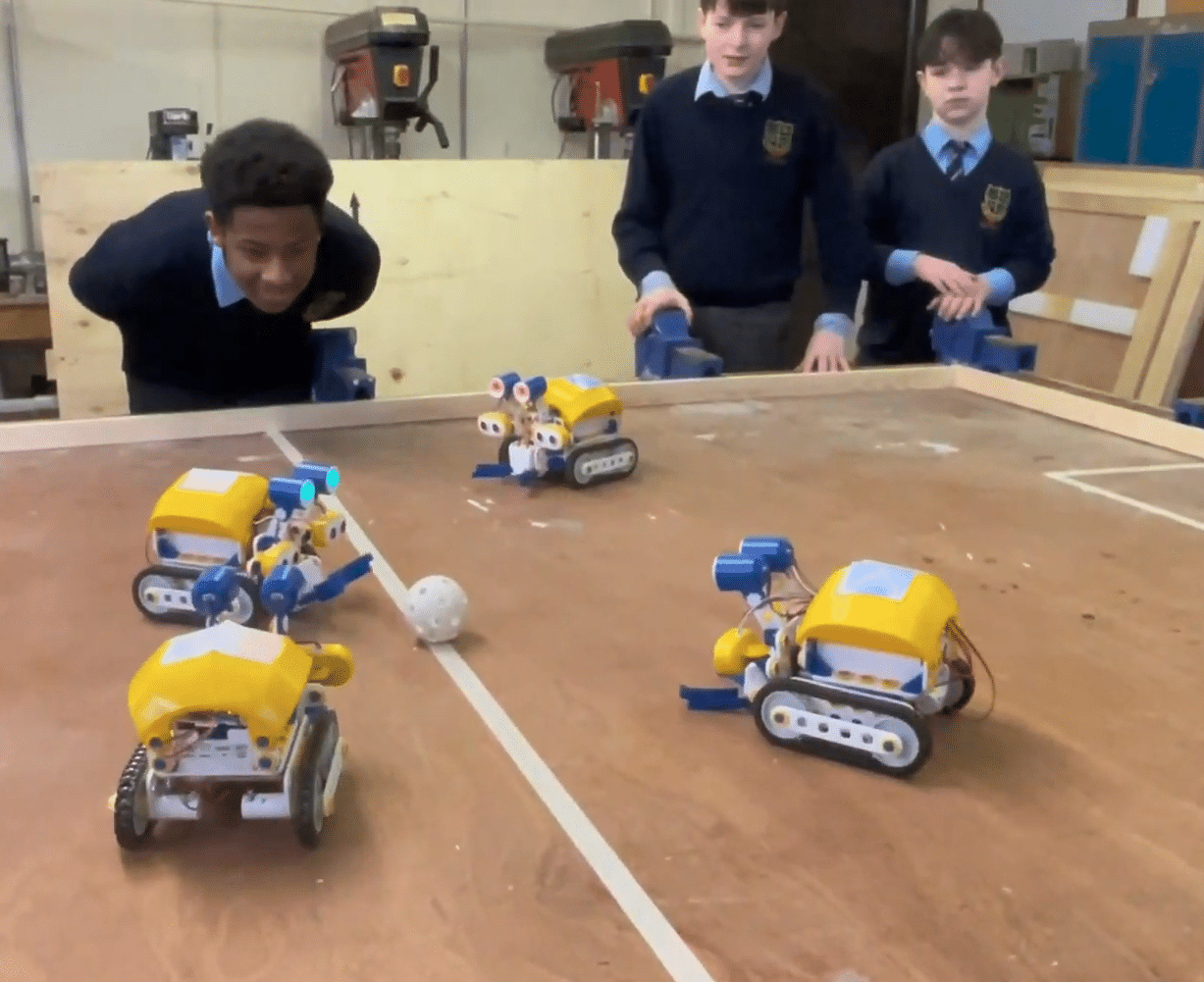
The class working together across the three teams
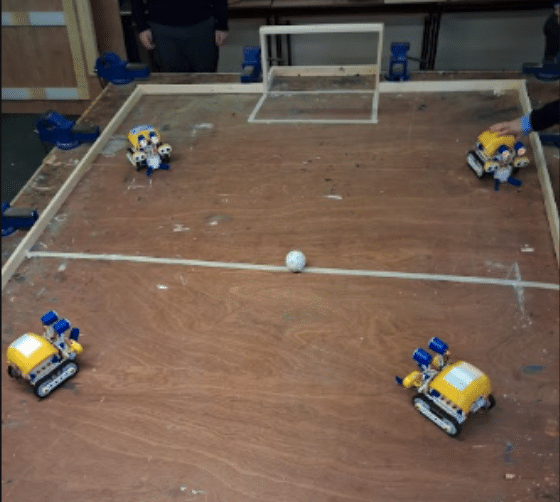
The finished robot football game with five Skribots, a custom pitch and coded LEDs.
Real skills that are ready for the future
By the end, students had designed and built a fully functioning robot football game using five Skribots, a custom pitch, wooden goals, and coded features like coloured LEDs for team identification. The finished project was submitted to Kinia’s Creative Technology Week as clear evidence of new skills applied creatively. The team earned 12 industry recognised youth credentials from Kinia to celebrate what they achieved.
Along the way they picked up Scratch programming, robotics and coding, engineering and design, testing and troubleshooting, plus film-making and editing to showcase the final result. These are exactly the digital and STEAM skills set out in Ireland’s Literacy, Numeracy and Digital Literacy Strategy 2024–2033.
The highlight for the whole group was seeing the completed game work for the first time and watching all five Skribots move around the pitch exactly as intended, after weeks of planning, building, coding and testing.
Working with the team made the task more enjoyable and mistakes are part of learning.
A STUDENT REFLECTION
Every problem was a chance to learn
Like any real build, there were hurdles. Students had to find a ball the robots could actually move, test whether they worked on astroturf, and make sure the ball stayed on the pitch.
They also learned that keeping every robot fully charged was essential to keep the game fair. Working through these problems helped them think creatively and build real confidence in finding their own solutions.
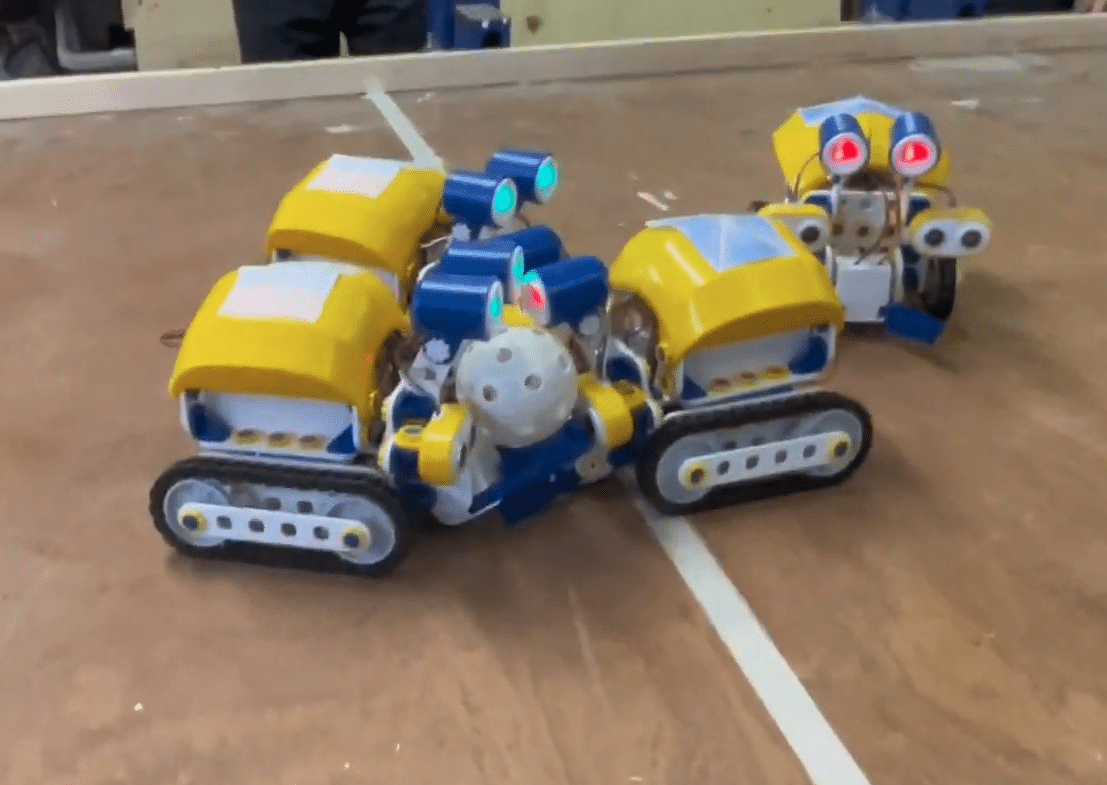
Ten students, five robots, and one game they built entirely themselves.
The project showed how robotics can make coding and computer science genuinely engaging. Instead of learning through worksheets or theory, students applied their knowledge to a real project they designed themselves, and it showed how far a specific skill set can travel: a Robotics training transferred cleanly from educator to students, and stretched to fit a hobby like football that the whole group cared about. As well as technical skills, they built confidence, resilience and teamwork, and something they were truly proud of.
Curriculum Connections
01 |
02 |
03 |
04 |
05 |
Science |
Technology |
Engineering |
Art |
Math |
Bring Robotics to your school
Give your students the skills to lead in Ireland’s digital future. Kinia trains and supports educators to run hands-on robotics projects that turn big ideas into finished builds, and build confidence, teamwork and future-ready skills along the way.
Talk to us: kinia.ie/contact
